
Kylver stone
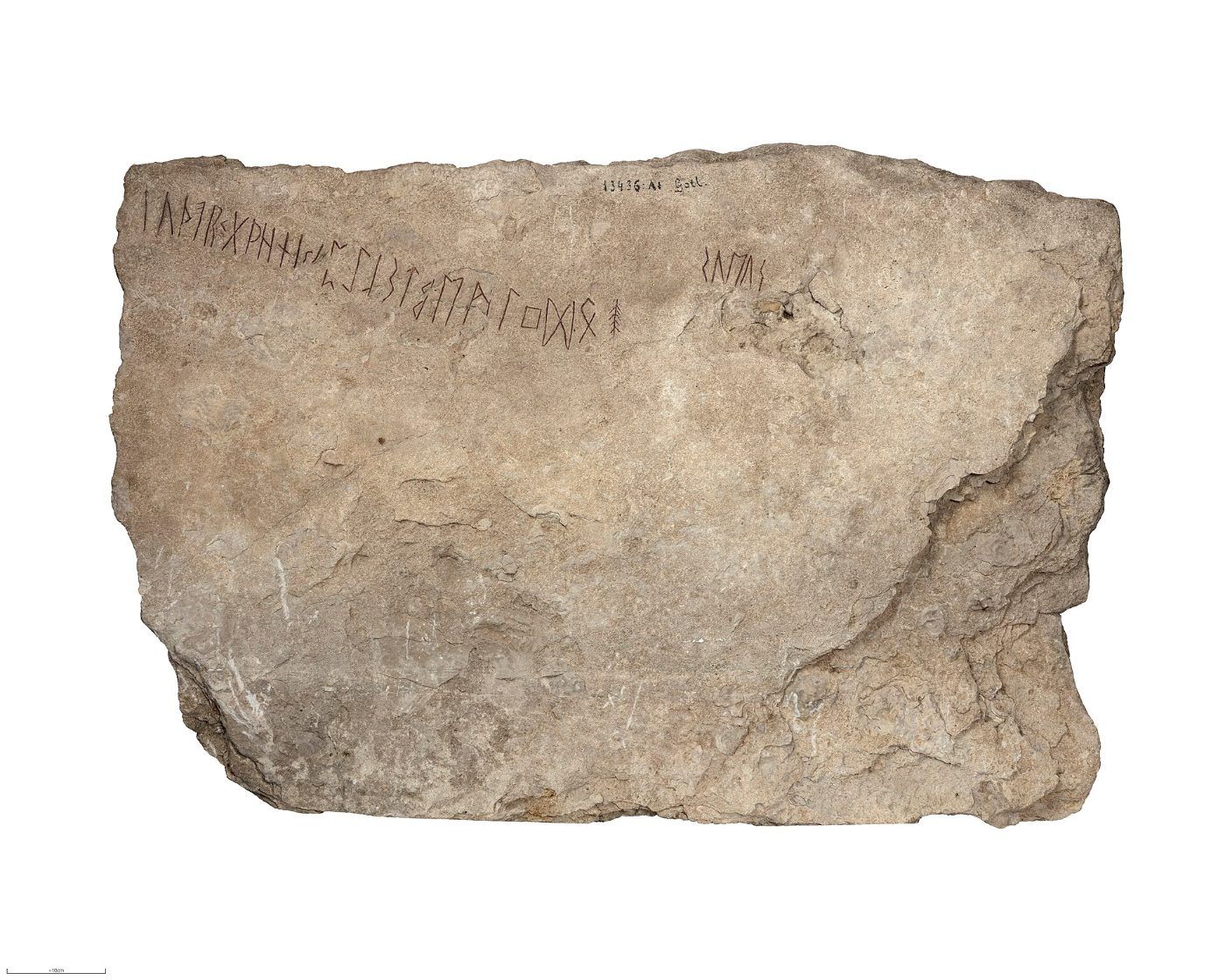
Limestone grave slab · Gotland, Sweden · 5th century CE
Draft content, not yet reviewed.
Read it rune by rune
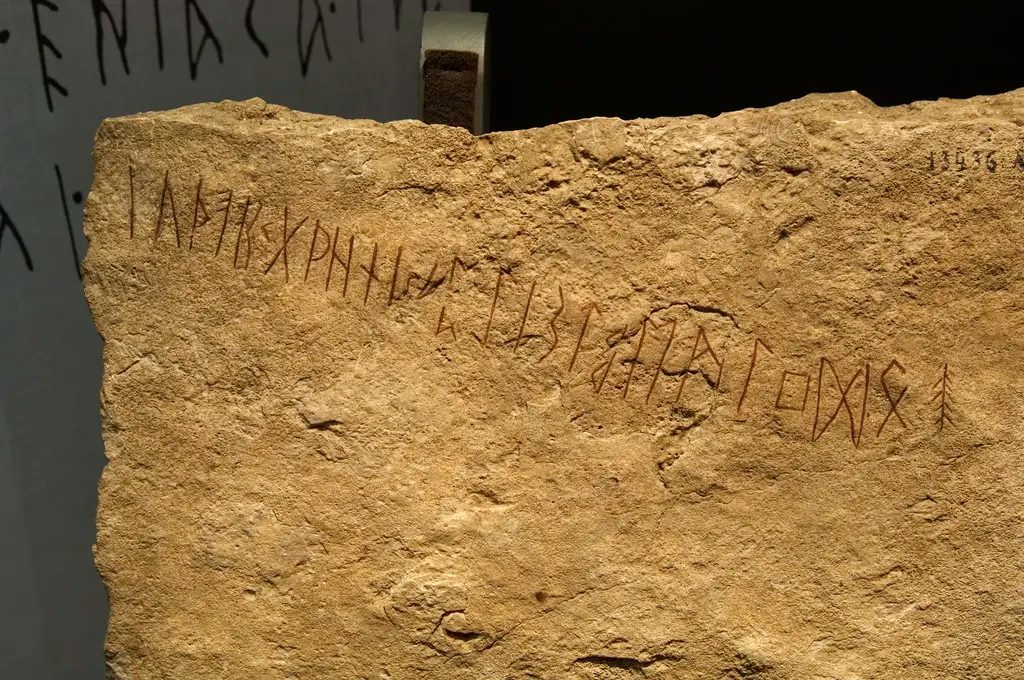
(f)uþarkg(w)hni(j)pïzstbemlŋdo [tree-like sign] / su(e)us
Shown left to right in reading order, in the standard rune shapes used on this site. On the object, the shapes, spacing, and direction can differ. Dashed runes are damaged or uncertain. Text: Rundata: G 88 (Kylver stone); Sveriges runinskrifter: G 88
The object
- Object
- Limestone slab from a grave Sveriges runinskrifter: G 88; Britannica: Kylver Stone
- Found
- Kylver, Stånga, Gotland, Sweden, in 1903 Sveriges runinskrifter: G 88; Rundata: G 88 (Kylver stone)
- Date
- 375/400–550 CE (sources differ) Rundata: G 88 (Kylver stone); Swedish History Museum: Kylver stone
- Kept at
- Swedish History Museum, Stockholm (13436) Rundata: G 88 (Kylver stone); Sveriges runinskrifter: G 88; Swedish History Museum: Kylver stone
Reading it
The stone carries the whole Elder Futhark, all 24 runes in order. It is the oldest surviving record of the full rune row.
Here p comes before ï, the reverse of the order on this site's rune row, and the row ends d, o. Scholars debate the order of both pairs.
Some runes are damaged or hard to read. Rundata marks f, w, and j in the row, and e in sueus, as uncertain. Several runes are also carved in unusual or reversed forms. This page shows the standard forms.
After the last rune is a figure like a tree: a stave with branches slanting down. Its meaning is disputed. One reading takes it as a multiplied t-rune.
Separately, the stone reads sueus, a palindrome that reads the same both ways. Its meaning is unknown, and many readings have been proposed.
Where the sources disagree
Rundata dates the inscription to 375/400–460/470 CE. The Swedish History Museum's record gives 400–550 CE.
The corpus edition describes the stone chest as standing inside a burial mound. The museum's record lists the grave as a stone cist in a flat cremation grave, with no mound.
The grave
Hans Hansson found the stone in the summer of 1903 while digging a grave field near the farm of Kylver. It was one of the limestone slabs that formed a stone chest inside a burial mound.
Which way the runes faced is disputed. Popular accounts say they faced inward, toward the dead, perhaps to protect the grave. The museum's record describes the inscription as being on the outer side. The corpus edition says the grave had already been disturbed, so it cannot be said for certain how the slab stood or which face was turned in, though the smooth face was probably the inner one.